


€ 274,61 Gratis verzending

Gesponsorde links
|
|
274,61 |
Naar shop
|

|
371,21 |
Naar shop
|
| VERGELIJK ALLE AANBIEDERS (2) | ||
 Beschrijving
Vergelijk aanbieders (2)
Gesponsorde links · Sommige shops betalen ons een vergoeding
€ 274,61 Gratis verzending
€ 371,21 Gratis verzending
Winkels met andere maten
Beschrijving
(1)
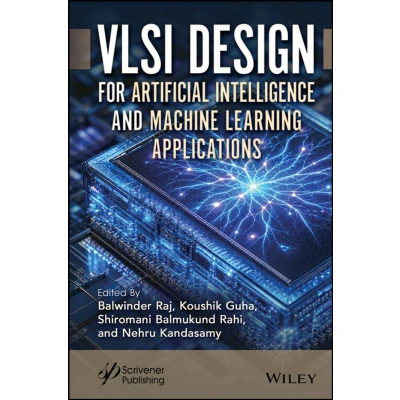
Unlock the next generation of AI chip design with this comprehensive guide to overcoming VLSI challenges, combining state-of-the-art nanomaterials, semiconductor modeling, and low-power circuit design into an essential roadmap for researchers and engineers. Very large-scale integration (VLSI) is the interdisciplinary science of utilizing advanced semiconductor technology to create various functions of a computer system. By combining VLSI technology, a very powerful computer architecture is possible to overcome the problems at different design stages. AI techniques such as knowledge-based and expert systems first define the problem and then choose the best solution from a range of possible approaches. This book comprehensively covers nanomaterials, semiconductor devices, and modeling and simulation techniques used to address the challenges of low-power VLSI chip design. It explores process variability, device sizing, power supply scaling, conventional and emerging materials, leakage mitigation techniques, and critical design tradeoffs. The book presents state-of-the-art research in nanomaterials and semiconductor technologies alongside practical design considerations for low-power VLSI circuits, making it an essential resource for scientists, researchers, and postgraduate students interested in AI hardware, semiconductor devices, modeling, and simulation. Unlock the next generation of AI chip design with this comprehensive guide to overcoming VLSI challenges, combining state-of-the-art nanomaterials, semiconductor modeling, and low-power circuit design into an essential roadmap for researchers and engineers. Very large-scale integration (VLSI) is the interdisciplinary science of utilizing advanced semiconductor technology to create various functions of a computer system. By combining VLSI technology, a very powerful computer architecture is possible to overcome the problems at different design stages. AI techniques such as knowledge-based and expert systems first define the problem and then choose the best solution from a range of possible approaches. This book comprehensively covers nanomaterials, semiconductor devices, and modeling and simulation techniques used to address the challenges of low-power VLSI chip design. It explores process variability, device sizing, power supply scaling, conventional and emerging materials, leakage mitigation techniques, and critical design tradeoffs. The book presents state-of-the-art research in nanomaterials and semiconductor technologies alongside practical design considerations for low-power VLSI circuits, making it an essential resource for scientists, researchers, and postgraduate students interested in AI hardware, semiconductor devices, modeling, and simulation.
 Prijshistorie
* Prijshistorie bevat geen data van Amazon.
Prijzen voor het laatst bijgewerkt op:
 Gerelateerde resultaten
 Productspecificaties


