


€ 115,00 Gratis verzending

Uitgelicht
|
|
115,00 |
Naar shop
|

|
121,18 |
Naar shop
|

|
121,18 |
Naar shop
|
| VERGELIJK ALLE AANBIEDERS (3) | ||
 Beschrijving
Vergelijk aanbieders (3)
€ 115,00 Gratis verzending
€ 121,18 Gratis verzending
€ 121,18 Gratis verzending
Winkels met andere maten
Beschrijving
(1)
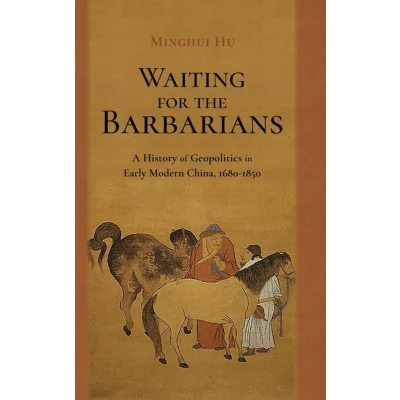
Waiting for the Barbarians: A History of Geopolitics in Early Modern China, 1680-1850 is a groundbreaking examination of how Qing China reimagined its imperial identity through territorial expansion, ideological adaptation, and cartographic precision. Between 1680 and 1850, the Qing integrated Central Asia, Tibet, and Mongolia into a vast, multiethnic empire-challenging traditional Confucian distinctions between civilization and "barbarism."Bridging political thought, cultural geography, and geodetic science, this book reveals how Qing rulers legitimized territorial claims using symbolic geography-such as surveys of the Yellow River's headwaters-and advanced tools like triangulation and the theodolite. These efforts fostered a new understanding of spatial order among Qing officials, intellectuals, and administrators.Engaging critically with New Qing History, the study situates Qing expansion within a global context, comparing its strategies with those of Russia and the United States. It traces the transformation of the "barbarian" label from an ethnic category to a geopolitical one, reflecting deeper shifts in how the Qing conceptualized inclusion, sovereignty, and empire.An essential resource for scholars and students of East Asian history, imperial studies, Qing politics, and historical cartography, this book provides an authoritative and accessible account of how early modern empires mapped, measured, and governed an increasingly interconnected world.
 Prijshistorie
 * Prijshistorie bevat geen data van Amazon, Amazon Marketplace.
Prijzen voor het laatst bijgewerkt op:
 Gerelateerde resultaten
 Productspecificaties


