

€ 31,74 Gratis verzending

Uitgelicht
|
|
31,74 |
Naar shop
|

|
31,74 |
Naar shop
|

|
36,99 |
Naar shop
|
| VERGELIJK ALLE AANBIEDERS (3) | ||
 Beschrijving
Vergelijk aanbieders (3)
€ 31,74 Gratis verzending
€ 31,74 Gratis verzending
€ 36,99 Gratis verzending
Winkels met andere maten
Beschrijving
(1)
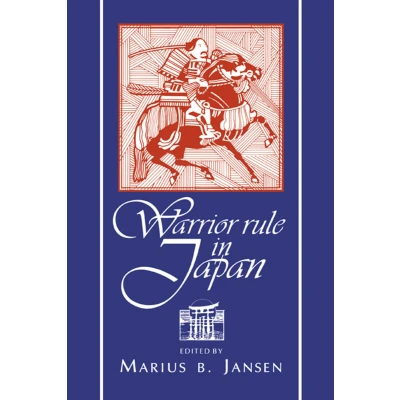
Japan was ruled by warriors for the better part of a millennium, from the twelfth to the nineteenth century. This volume, comprised of chapters taken from volumes 3 and 4 of 'The Cambridge History of Japan', traces the struggle among competing leagues of fighting men and the institutional development of warrior rule. Japan was ruled by warriors for the better part of a millenium. From the twelfth to the nineteenth century its political history was dominated by the struggle of competing leagues of fighting men. This paperback volume, comprised of chapters taken from volumes 3 and 4 of The Cambridge History of Japan, traces the institutional development of warrior rule and dominance. Fourteenth-century warfare weakened the aristocratic and clerical control over provincial estates, and the power of military governors grew steadily. By the eighteenth century, however, warrior rule had come full circle. Centuries of peace brought a transformation and bureaucratization of the samurai class. Although samurai malcontents resisted the Meiji Restoration, many of the Meiji government's leaders were former samurai, and warrior values remained central to the ethical code of modern Japan.
 Prijshistorie
 * Prijshistorie bevat geen data van Amazon, Amazon Marketplace.
Prijzen voor het laatst bijgewerkt op:
 Gerelateerde resultaten
 Productspecificaties


