


€ 43,99 Gratis verzending

Uitgelicht
|
|
43,99 |
Naar shop
|

|
46,90 |
Naar shop
|
| VERGELIJK ALLE AANBIEDERS (2) | ||
 Beschrijving
Vergelijk aanbieders (2)
€ 43,99 Gratis verzending
€ 46,90 Gratis verzending
Winkels met andere maten
Beschrijving
(1)
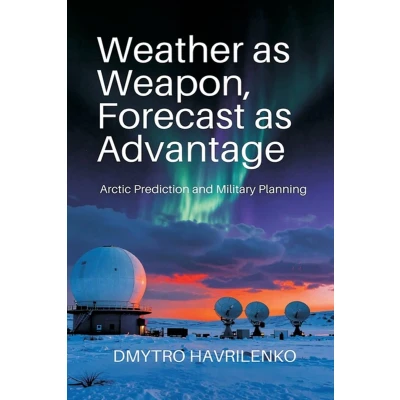
In the far north, weather does not merely disrupt plans; it rewrites them, sometimes fast enough to change what opponents think they are seeing. From early polar exploration and Cold War-era basing to today's renewed interest in Arctic access, the enduring problem has been the same: operations depend on prediction, yet the Arctic is where prediction is hardest and where error is most consequential. The result is a quiet contest over timing, access, and exposure, in which a "good enough" forecast can be a tactical edge and a confident forecast can be a trap.Weather as Weapon, Forecast as Advantage explains how Arctic weather forecasting shapes military planning beyond safety considerations. It shows why forecast uncertainty must be read through the lens of the decision it serves, the time available to adjust, and the fragility of the information chain. Moving from sensing networks and model limits to command judgement and replanning costs, the book traces how forecasts enter decision cycles for aviation, maritime routing, over-ice movement, and resupply. It also examines how adversaries can exploit dependence on prediction: targeting observations, leveraging masking conditions, and anticipating predictable mobility windows that planners treat as rare opportunities.Written for students, general readers, and analysts of strategy and security, the book provides a practical framework for linking prediction quality to planning choices, risk hedges, and operational tempo. Readers finish with a sharper sense of which kinds of forecasts matter most for which missions, how uncertainty should be communicated and stress-tested, and why the most decisive advantage is often not better weather knowledge in the abstract, but better organisational use of imperfect knowledge under competition.
 Prijshistorie
 * Prijshistorie bevat geen data van Amazon.
Prijzen voor het laatst bijgewerkt op:
 Gerelateerde resultaten
 Productspecificaties


