


€ 37,29 Gratis verzending

Uitgelicht
|
|
37,29 |
Naar shop
|
| VERGELIJK ALLE AANBIEDERS (1) | ||
 Beschrijving
Vergelijk aanbieders (1)
€ 37,29 Gratis verzending
Winkels met andere maten
Beschrijving
(1)
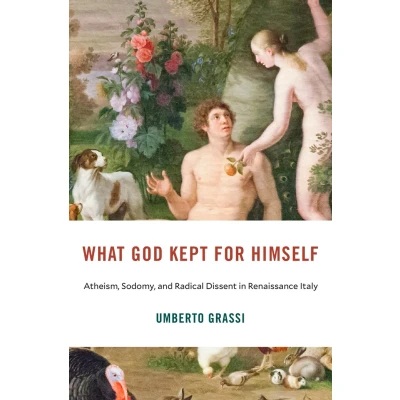
In early modern Italy, a wave of Inquisition trials prosecuted radical dissenters for their claims that Adam and Eve had angered God by engaging in sodomy—a sexual practice reserved for the divine. Such statements, which led to charges of atheism, played a key role in fueling broader critiques of Church corruption and Christian morality. A revelatory account of sexual nonconformity and radical religious dissent in Renaissance Italy, drawing on never-before-studied Inquisition trials.Between the sixteenth and eighteenth centuries, a series of highly controversial Inquisition trials took place throughout the Italian peninsula. The defendants were all accused of the same heresy: claiming that Adam and Eve’s original sin had been committing sodomy, a “celestial” pleasure reserved for God alone. Such claims were not merely subversive sexual innuendo. Rather, they were the most radical expressions of a much broader critique—one that not only targeted repressive sexual taboos but also denounced the corruption of the Church, questioned the authority of the pope, and suggested that organized religion itself was a hoax designed to maintain elite power.As Umberto Grassi shows, these dissenters’ beliefs about sexual freedom came to play a crucial role in the development of skeptical and atheistic positions. Many of the accused argued that, by violating God’s exclusive right to engage in sodomy, Adam and Eve dared to make themselves like gods. This view, which led to charges of atheism, radicalized a more widely held belief that the ruling classes banned sodomy to prevent the masses from enjoying it. In turn, such heresies fueled indictments of Christian morality as an all-too-human invention, whose purpose was to reinforce a social order in which the ruling classes controlled both sexuality and religious truth.Tracing a radical tradition of thought on trial, What God Kept for Himself establishes the firm relationship between sexual nonconformity and religious dissent in the early modern Mediterranean world.
 Productspecificaties
| EAN |
|
|---|---|
| Maat |
|
 Prijshistorie
 Prijzen voor het laatst bijgewerkt op:
 Gerelateerde resultaten


