








What We Choose to Remember - and ARe Allowed Forget: Memory, Power, the Architecture of Remembrance
Uitgelicht

|
21,96 |
Naar shop
|

|
37,23 |
Naar shop
|
 Beschrijving
Bol
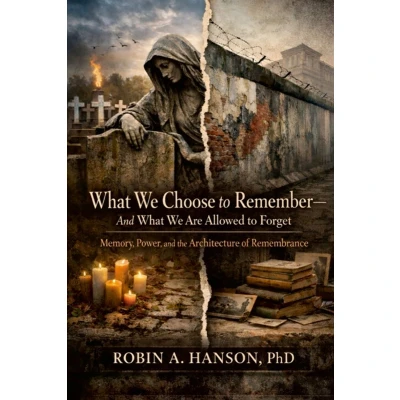
What We Choose to Remember-and What We Are Allowed to Forget examines memory not as a private act, but as a cultural system shaped by power, space, and authority. Through cemeteries, monuments, photographs, exhibitions, internment camps, and symbolic traditions, Robin A. Hanson explores how remembrance is organized, regulated, and normalized-and how exclusion is often rendered invisible through ordinary procedures. Moving across American national cemeteries, racial segregation in burial practices, the use of photography as a technology of memory, and the bureaucratic logic of wartime confinement, the book traces recurring patterns through which injustice becomes administratively acceptable long before its consequences are fully visible. Later chapters turn to spectacle, monumentality, and suppressed symbolic systems, revealing how memory persists both within and beneath official narratives. This is not a book of moral ranking or historical equivalence. It is a study of trajectory-how early stages of classification, containment, and reverence make later outcomes possible, and how memory itself can function as a stabilizing force for power. Blending cultural analysis with close attention to material form and visual practice, What We Choose to Remember-and What We Are Allowed to Forget offers a compelling framework for understanding how societies construct meaning from the past-and what is lost when remembrance is managed rather than examined.


 Beschrijving
(2)
Beschrijving
(2)
What We Choose to Remember-and What We Are Allowed to Forget examines memory not as a private act, but as a cultural system shaped by power, space, and authority. Through cemeteries, monuments, photographs, exhibitions, internment camps, and symbolic traditions, Robin A. Hanson explores how remembrance is organized, regulated, and normalized-and how exclusion is often rendered invisible through ordinary procedures. Moving across American national cemeteries, racial segregation in burial practices, the use of photography as a technology of memory, and the bureaucratic logic of wartime confinement, the book traces recurring patterns through which injustice becomes administratively acceptable long before its consequences are fully visible. Later chapters turn to spectacle, monumentality, and suppressed symbolic systems, revealing how memory persists both within and beneath official narratives. This is not a book of moral ranking or historical equivalence. It is a study of trajectory-how early stages of classification, containment, and reverence make later outcomes possible, and how memory itself can function as a stabilizing force for power. Blending cultural analysis with close attention to material form and visual practice, What We Choose to Remember-and What We Are Allowed to Forget offers a compelling framework for understanding how societies construct meaning from the past-and what is lost when remembrance is managed rather than examined.
AmazonPagina's: 324, Paperback, Galiah Publishing
 Productspecificaties
 Prijshistorie
* Prijshistorie bevat geen data van Amazon.
Prijzen voor het laatst bijgewerkt op:
 Gerelateerde resultaten


