


€ 38,99 Gratis verzending

Uitgelicht
|
|
38,99 |
Naar shop
|

|
40,94 |
Naar shop
|

|
40,94 |
Naar shop
|
| VERGELIJK ALLE AANBIEDERS (3) | ||
 Beschrijving
Vergelijk aanbieders (3)
€ 38,99 Gratis verzending
€ 40,94 Gratis verzending
€ 40,94 Gratis verzending
Winkels met andere maten
Beschrijving
(1)
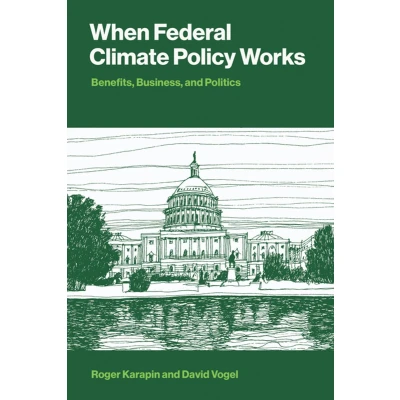
An original analysis of the federal government’s sectoral climate policy accomplishments over the last five decades, with recommendations for policy makers. When Federal Climate Policy Works challenges the widely accepted belief that the federal government has been unable to adopt effective policies to reduce greenhouse gas (GHG) emissions. Roger Karapin and David Vogel argue that the federal government has made measurable progress by adopting more narrowly focused sectoral policies. These have reduced GHG emissions in many sectors: through fuel economy and GHG standards for motor vehicles, the promotion of electric vehicles, mandatory standards and voluntary Energy Star labels for the energy efficiency of appliances and equipment, tax credits for renewable energy investments and production, restrictions on HFCs, and regulations on methane emissions from landfills and oil and gas production. Almost all of these measures began as unintentional climate policies during the 1970s, when they received substantial bipartisan support. Their initial policy frameworks have exhibited substantial continuity even after the policies become repositioned as more politically contentious, explicit climate change policies during the 1990s and later decades. Throughout the last 50 years, policy adoption has depended on including non-climate benefits, gaining business acceptance, and navigating partisan politics.
 Prijshistorie
 * Prijshistorie bevat geen data van Amazon, Amazon Marketplace.
Prijzen voor het laatst bijgewerkt op:
 Gerelateerde resultaten
 Productspecificaties


