


€ 11,50 € 2,99 verzendkosten Totaal € 14,49

Uitgelicht
|
|
11,50 |
Naar shop
|

|
12,01 |
Naar shop
|
| VERGELIJK ALLE AANBIEDERS (2) | ||
 Beschrijving
Vergelijk aanbieders (2)
€ 11,50 € 2,99 verzendkosten Totaal € 14,49
€ 12,01 Gratis verzending
Winkels met andere maten
Beschrijving
(1)
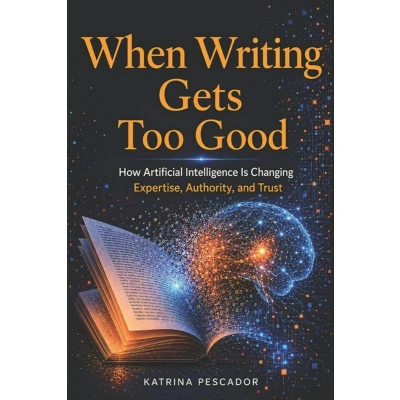
Artificial intelligence has made writing faster, easier, and more polished than ever before. But something fundamental has changed. For generations, writing served as evidence of thinking. Clear, structured language signaled understanding. Strong writing reflected effort, judgment, and expertise. That connection is no longer reliable. Today, AI can generate fluent, persuasive language in seconds. Emails, reports, and analyses arrive polished and confident-even when the reasoning behind them is incomplete or absent. The signals we once trusted-clarity, structure, tone-can now be replicated without the same intellectual process behind them. You can no longer assume that well-written means well-reasoned. You may already be seeing the effects: - Work that sounds correct-but falls apart under scrutiny- Confident language masking shallow or missing understanding- Decisions being made based on polished-but unreliable-information >What this book examines In When Writing Gets Too Good, Katrina Pescador examines how artificial intelligence is reshaping communication-and why the impact goes far beyond speed or productivity. Drawing on years of experience as a writer and hands-on work with AI systems in real-world environments, she explores what happens when language becomes effortless-and what that means for how we interpret credibility. At its core, this book addresses a fundamental shift: The separation of language from thinking. Inside the book, you'll explore: - How AI creates the illusion of expertise without underlying understanding- Why clear, confident writing no longer guarantees accuracy or depth- How communication is shifting as AI becomes embedded in everyday workflows- The growing gap between presentation and substance in professional environments- What this means for leadership, education, and decision-making- Why the responsibility for evaluating truth is shifting from writer to reader Who this book is for - Professionals navigating AI in the workplace- Leaders responsible for decision-making and communication- Educators and students confronting changes in learning and assessment Why this matters now >The challenge is how to evaluate it. When language becomes easy to generate, the burden shifts. Not to the writer. >This is not a rejection of artificial intelligence. It is a clear examination of how AI is reshaping writing, expertise, authority, and trust-and what it takes to navigate that shift responsibly. Because when writing gets too good, the question is no longer how something is written. It is whether the knowledge behind it still exists. For readers of Nicholas Carr, Shoshana Zuboff, and Cal Newport, this book offers a sharp, experience-driven perspective on one of the most important transformations in modern communication.
 Prijshistorie
 * Prijshistorie bevat geen data van Amazon.
Prijzen voor het laatst bijgewerkt op:
 Gerelateerde resultaten
 Productspecificaties


