

€ 23,02 Gratis verzending

Gesponsorde links
|
|
23,02 |
Naar shop
|

|
23,02 |
Naar shop
|

|
24,00 |
Naar shop
|
| VERGELIJK ALLE AANBIEDERS (3) | ||
 Beschrijving
Vergelijk aanbieders (3)
Gesponsorde links · Sommige shops betalen ons een vergoeding
€ 23,02 Gratis verzending
€ 23,02 Gratis verzending
€ 24,00 € 2,99 verzendkosten Totaal € 26,99
Winkels met andere maten
Beschrijving
(1)
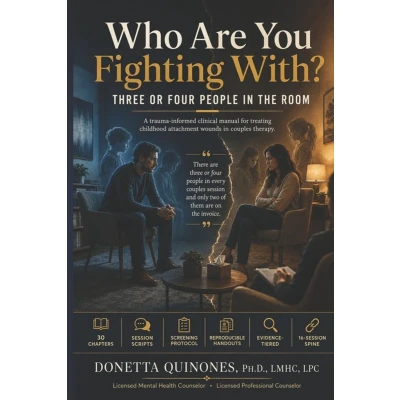
There are three or four people in every couples session, and only two of them are on the invoice.You named the pursue-withdraw pattern out loud. Both partners agreed with you. Nothing changed - and by session nine you are quietly wondering whether the problem is the couple or the model.It is usually neither. A great deal of what arrives as a couple problem is not, in origin, a couple problem. It is a childhood strategy still running, in a room that no longer requires it, aimed at a person who was not there when it was installed. Most training programs never hand you a usable map of that territory, and the ones that gesture at it stop exactly where you need words.This manual gives you the words. Thirty chapters, each built the same way: a composite case at session-level detail, the mechanism in plain English, the evidence honestly tiered, and a Say It Like This box with the verbatim wording - plus what not to say, which is the half most books leave out.What makes this one different- The evidence is tiered on the page. Every substantive claim is marked Solid, Reasonable, Clinical, or Contested - including the author's own models. Where something is untested, it says so in colour, so you never tell a client something you cannot defend.- Fathers and mothers both. Paternal absence, maternal wounds, and the gendered routes each takes into a marriage, handled without the mother-blame that disgraced an earlier generation of this literature.- The safety line, drawn hard. A full screening protocol and three chapters on where attachment framing stops applying. Coercive control is not an attachment problem, and "you each do half of this" can be a lethal sentence.- Plain language throughout. The standard is whether your client can repeat it in the car. Ready on a Thursday at 4:15- Reproducible client handouts, cleared for use with your own caseload- An intake and screening protocol with a disposition table- A sixteen-session spine, and where to depart from it- A script bank collecting every piece of verbatim wording in one place- A glossary and a rapid-reference card keyed to what the client actually saidWritten for licensed and pre-licensed mental health professionals, marriage and family therapists, psychologists and social workers doing couple work, and graduate clinicians in supervision. It assumes you know how to conduct therapy. It does not assume anyone gave you a map of this particular territory.Read Chapters 1, 22 and 23 first. Forty minutes, and the rest of the book becomes a lookup.
 Prijshistorie
* Prijshistorie bevat geen data van Amazon, Amazon Marketplace.
Prijzen voor het laatst bijgewerkt op:
 Gerelateerde resultaten
 Productspecificaties


