


€ 15,00 € 2,99 verzendkosten Totaal € 17,99

Gesponsorde links
|
|
15,00 |
Naar shop
|

|
15,37 |
Naar shop
|

|
15,37 |
Naar shop
|
| VERGELIJK ALLE AANBIEDERS (3) | ||
 Beschrijving
Vergelijk aanbieders (3)
Gesponsorde links · Sommige shops betalen ons een vergoeding
€ 15,00 € 2,99 verzendkosten Totaal € 17,99
€ 15,37 Gratis verzending
€ 15,37 Gratis verzending
Winkels met andere maten
Beschrijving
(1)
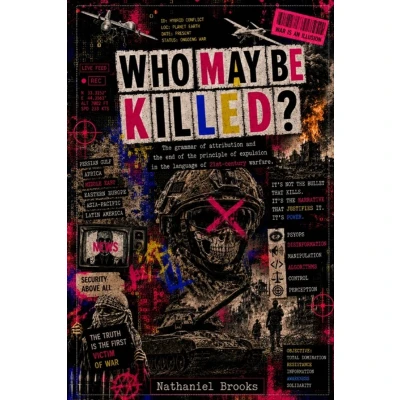
The language that authorizes destruction today is not a language of hatred. It is a language of competence. We were taught to watch for a particular vocabulary: the insect, the parasite, the vermin. A century of scholarship holds that mass violence requires the victim to be removed from the human community first, and that language performs the removal. The instruments built to detect the coming of atrocity were calibrated against exactly that. Open the file by which a state authorizes the killing of a named person today and you find none of it. You find legal categories, thresholds of participation, conduct profiles, confidence levels, quantified estimates of foreseeable harm, records of who approved what and at what hour. Not one proposition about the nature of the enemy. Who May Be Killed? argues that this is not a disguise. The contemporary architecture of authorization does not remove the target from the category of the human - it inscribes him fully within it. One does not warn vermin. One does not grant it a deadline, or hold it responsible for having stayed. Across five devices that were born in domains with no contact between them - the legal category, the arithmetic of proportionality, the regime of persistent observation, the warning, and the posthumous administration of grief - the book finds the same structure, and finds it five times without looking for it: 1) the norm requiring distinction creates the category of those who failed to distinguish themselves; 2) the norm requiring estimation creates the category of harms estimated and accepted; >Restricting and authorizing turn out to be the same movement. Five independent coincidences are not a coincidence. The argument is made without any assumption of bad faith. It makes sense only on the supposition that the lawyer drafting the opinion, the analyst applying the methodology, and the officer who insists on warning against his peers' advice all do well what it falls to them to do. That is the discomfort the book leaves: the good faith of each operator is compatible with an aggregate result none of them would endorse as his own decision. Confronted with Rwanda in 1994 and with the destruction of the European Jews - the two cases that favour it least - the thesis does not emerge confirmed. It emerges alive, and reformulated. Twenty tables and twenty plates. Fully referenced. Sources entirely public.
 Prijshistorie
* Prijshistorie bevat geen data van Amazon, Amazon Marketplace.
Prijzen voor het laatst bijgewerkt op:
 Gerelateerde resultaten
 Productspecificaties


