








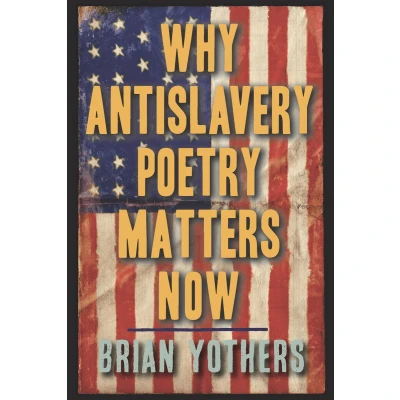
Why Antislavery Poetry Matters Now
Uitgelicht

|
125,00 |
Naar shop
|
 Beschrijving
Bol
A history of the nineteenth-century poetry of slavery and freedom framed as an argument about the nature of poetry itself: why we write it, why we read it, how it interacts with history. This book is a history of the nineteenth-century poetry of slavery and freedom framed as an argument about the nature of poetry itself: why we write it, why we read it, how it interacts with history. The poetry of the transatlantic abolitionist movement represented a powerful alliance across racial and religious boundaries; today it challenges the demarcation in literary studies between cultural and aesthetic approaches. Now is a particularly apt moment for its study. This book is a history of the nineteenth-century poetry of slavery and freedom framed as an argument about the nature of poetry itself: why we write it, why we read it, how it interacts with history. Poetry that speaks to a broad cross-section of society with moral authority, intellectual ambition, and artistic complexity mattered in the fraught years of the mid nineteenth century; Brian Yothers argues that it can and must matter today. Yothers examines antislavery poetry in light of recent work by historians, scholars in literary, cultural, and rhetorical studies, African-Americanists, scholars of race and gender studies, and theorists of poetics. That interdisciplinary sweep is mirrored by the range of writers he considers: from the canonical - Whitman, Barrett Browning, Beecher Stowe, DuBois, Melville - to those whose influence has faded - Longfellow, Lydia Huntley Sigourney, John Pierpont, John Greenleaf Whittier, James Russell Lowell - to African American writers whose work has been recovered in recent decades - James M. Whitfield, William Wells Brown, George Moses Horton, Frances E. W. Harper.


Vergelijk aanbieders (1)

 Beschrijving
(1)
Beschrijving
(1)
A history of the nineteenth-century poetry of slavery and freedom framed as an argument about the nature of poetry itself: why we write it, why we read it, how it interacts with history. This book is a history of the nineteenth-century poetry of slavery and freedom framed as an argument about the nature of poetry itself: why we write it, why we read it, how it interacts with history. The poetry of the transatlantic abolitionist movement represented a powerful alliance across racial and religious boundaries; today it challenges the demarcation in literary studies between cultural and aesthetic approaches. Now is a particularly apt moment for its study. This book is a history of the nineteenth-century poetry of slavery and freedom framed as an argument about the nature of poetry itself: why we write it, why we read it, how it interacts with history. Poetry that speaks to a broad cross-section of society with moral authority, intellectual ambition, and artistic complexity mattered in the fraught years of the mid nineteenth century; Brian Yothers argues that it can and must matter today. Yothers examines antislavery poetry in light of recent work by historians, scholars in literary, cultural, and rhetorical studies, African-Americanists, scholars of race and gender studies, and theorists of poetics. That interdisciplinary sweep is mirrored by the range of writers he considers: from the canonical - Whitman, Barrett Browning, Beecher Stowe, DuBois, Melville - to those whose influence has faded - Longfellow, Lydia Huntley Sigourney, John Pierpont, John Greenleaf Whittier, James Russell Lowell - to African American writers whose work has been recovered in recent decades - James M. Whitfield, William Wells Brown, George Moses Horton, Frances E. W. Harper.
 Productspecificaties
| EAN |
|
|---|---|
| Maat |
|
 Prijshistorie
Prijzen voor het laatst bijgewerkt op:
 Gerelateerde resultaten


