


€ 16,00 € 2,99 verzendkosten Totaal € 18,99

Gesponsorde links
|
|
16,00 |
Naar shop
|

|
16,91 |
Naar shop
|

|
16,91 |
Naar shop
|
| VERGELIJK ALLE AANBIEDERS (3) | ||
 Beschrijving
Vergelijk aanbieders (3)
Gesponsorde links · Sommige shops betalen ons een vergoeding
€ 16,00 € 2,99 verzendkosten Totaal € 18,99
€ 16,91 Gratis verzending
€ 16,91 Gratis verzending
Winkels met andere maten
Beschrijving
(1)
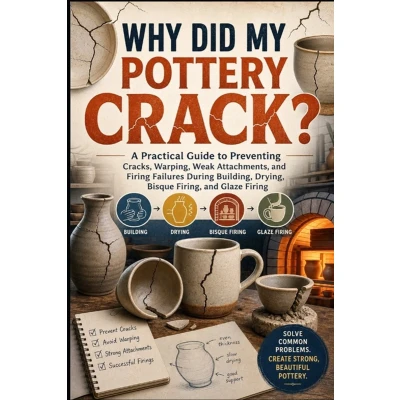
Why did your pottery crack-even when it looked perfect before firing?Cracks can appear during building, drying, bisque firing, glaze firing, or even after a piece has cooled. The difficult part is figuring out where the problem actually began. A crack that appears in the kiln may have started with uneven thickness, poor compression, mismatched moisture levels, rushed drying, a weak attachment, or improper firing conditions.Why Did My Pottery Crack? is a practical troubleshooting guide for beginner and intermediate potters who want to prevent cracks, warping, broken handles, weak joints, and firing failures.Inside, you will learn how to: - Identify common pottery cracks and their likely causes- Prevent S-cracks in wheel-thrown bowls, mugs, and vessels- Avoid cracks around handles, feet, knobs, spouts, and attachments- Match moisture levels when joining clay pieces- Improve scoring, slipping, compression, and reinforcement- Dry pottery slowly and evenly without warping- Recognize when clay is truly bone dry and ready to fire- Reduce cracking during bisque and glaze firing- Understand dunting, thermal shock, glaze-fit problems, and cooling cracks- Repair damage during the soft-clay, leather-hard, and bone-dry stages- Decide when a damaged piece should be repaired or reclaimedThe book also explains why uneven wall thickness, heavy attachments, trapped moisture, improper kiln loading, fast heating, and sudden cooling can damage otherwise promising work.Whether you create mugs, bowls, plates, tiles, planters, sculptures, or slab-built pottery, this guide will help you diagnose problems more accurately and prevent them from happening again.Stop guessing why your pottery failed. Learn how to build, dry, and fire stronger ceramic pieces while wasting less clay, time, and effort.
 Prijshistorie
* Prijshistorie bevat geen data van Amazon, Amazon Marketplace.
Prijzen voor het laatst bijgewerkt op:
 Gerelateerde resultaten
 Productspecificaties


