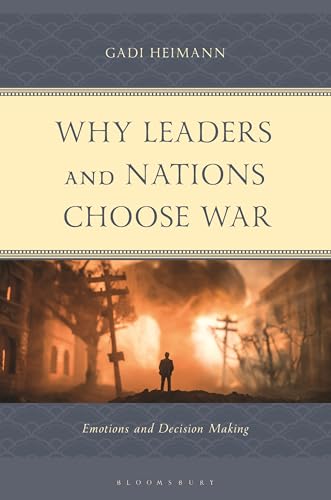
Why Leaders and Nations Choose War: Emotions Decision Making
Uitgelicht
|
104,40 |
Naar shop
|
|
109,95 |
Naar shop
|
|
109,95 |
Naar shop
|
Beschrijving
Bol
This book shows how fear, wishful thinking, and regret have shaped leaders’ decisions for war across the twentieth century. Combining psychology, international relations theory, and historical case studies, it demonstrates the profound impact of emotions on statecraft and the outbreak of conflict. Why Leaders and Nations Choose War: Emotions and Decision Making analyses the decisive role that emotions play in one of the most consequential arenas of human life—war. Challenging the assumption that leaders act purely on rational calculation, this demonstrates how fear, wishful thinking, and regret have repeatedly shaped fateful decisions in modern history. Drawing on psychological theory, international relations, and historical case studies, Gadi Heimann explains how emotions can both enhance and distort judgment, tipping the scales between peace and conflict.Through vivid accounts of twentieth-century wars, Why Leaders and Nations Choose War reveals how fear drove Germany into World War I and Israel into preemptive strikes throughout its history; how wishful thinking fueled Germany’s submarine offensive and Japan’s attack on Pearl Harbor; and how regret shaped U.S. isolationism and later the Cold War. By weaving together theory and narrative, the book provides a new lens for understanding the complex interplay between emotion and statecraft.
AmazonPagina's: 256, Hardcover, Bloomsbury Academic
Prijshistorie
* Prijshistorie bevat geen data van Amazon, Amazon Marketplace.
Prijzen voor het laatst bijgewerkt op:
