

€ 21,27 Gratis verzending

Uitgelicht
|
|
21,27 |
Naar shop
|

|
23,00 |
Naar shop
|
| VERGELIJK ALLE AANBIEDERS (2) | ||
 Beschrijving
Vergelijk aanbieders (2)
€ 21,27 Gratis verzending
€ 23,00 € 2,99 verzendkosten Totaal € 25,99
Winkels met andere maten
Beschrijving
(1)
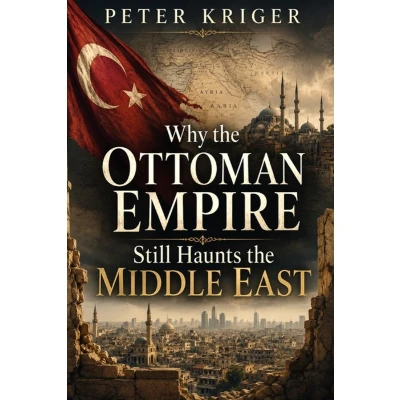
For four hundred years, most of the Middle East was not a collection of countries. It was a set of provinces, and provinces do not have foreign ministries. They have tax registers, religious courts, and a distant capital that keeps the important decisions for itself. When that capital vanished after the First World War, the region inherited everything except the one skill that turns a territory into a state: the practice of dealing with the world outside as an equal. This book is about what happened next, and about why it is still happening. It argues that the Ottoman Empire did not leave the Middle East a memory. It left a working legal system, a habit of sorting people by faith rather than by citizenship, and a set of borders drawn by people who had never lived inside them. Israeli courts still consult a land code written in 1858. Lebanese and Israeli couples still fly to Cyprus to be married by a state that will register them. Christian denominations still observe an arrangement fixed by an imperial decree of 1852. A government that ceased to exist in 1922 is still, quietly, issuing instructions. From the boy levy to the bondholders who collected an empire's taxes, from the governor who tried to conduct his own foreign policy and was stopped by the great powers, to the mandates, the map, and the quarrels that fill the news each evening, this is the story of a dissolution that was never completed. It is told plainly, with no verdicts handed down on conflicts that are still being fought, and with equal impatience for the fairy tale of imperial tolerance and the cartoon of the terrible Turk. The empire is gone. The paperwork is not. Keywords: Ottoman Empire, Middle East history, Sykes-Picot, millet system, Mandate Palestine, Lebanon, sovereignty
 Prijshistorie
 * Prijshistorie bevat geen data van Amazon.
Prijzen voor het laatst bijgewerkt op:
 Gerelateerde resultaten
 Productspecificaties


