

€ 11,95 Gratis verzending

Gesponsorde links
|
|
11,95 |
Naar shop
|

|
11,95 |
Naar shop
|

|
13,50 |
Naar shop
|
| VERGELIJK ALLE AANBIEDERS (3) | ||
 Beschrijving
Vergelijk aanbieders (3)
Gesponsorde links · Sommige shops betalen ons een vergoeding
€ 11,95 Gratis verzending
€ 11,95 Gratis verzending
€ 13,50 € 2,99 verzendkosten Totaal € 16,49
Winkels met andere maten
Beschrijving
(1)
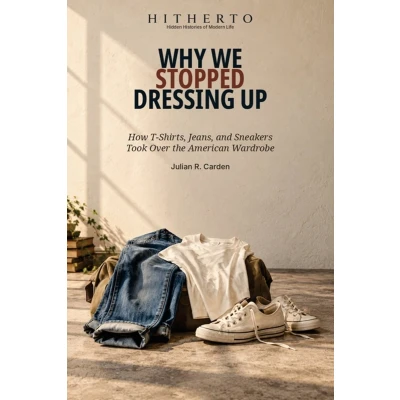
Wear a jacket, polished shoes, or a tie on an ordinary day and someone may ask a surprisingly revealing question: Why are you dressed up?Why We Stopped Dressing Up tells the surprising history of how jeans, T-shirts, sneakers, and other once-specialized garments escaped the particular worlds that had justified them and became ordinary enough to move through much of American life without explanation.Americans did not simply abandon formality because comfortable clothes were invented. Older wardrobes were organized through a complicated map of circumstances: work, business, sport, travel, visiting, mourning, evening events, ceremonies, and other settings could carry different expectations. Clothes that look formal to us were not necessarily "formal" to the people wearing them; what mattered was whether an outfit belonged in the right place, at the right time, on the right person.Julian R. Carden follows three especially revealing garments as they crossed those boundaries. Jeans carried associations with labor into ranches, campuses, youth culture, leisure, movies, and fashion. The T-shirt moved from underwear and specialized use toward military life, sport, youth culture, politics, advertising, and everyday dress. Sneakers traveled outward from athletics into school, travel, fitness, music, street culture, and eventually ordinary life far removed from the games that once explained them. The crucial transformation was not simply popularity. It was that each garment accumulated enough different accepted uses that no single activity could define where it belonged anymore.The book also shows why casualization was never a simple story of freedom defeating rules. Dress expectations loosened unevenly, and the same clothes could be read differently depending on occupation, age, gender, race, class, body, status, and institutional authority. Offices, schools, clubs, courts, restaurants, and other gatekeepers did not stop judging clothing simply because they stopped prescribing every garment. In many places, detailed rules gave way to broader and more ambiguous standards such as "professional" or "appropriate."What changed most dramatically was the distance an ordinary outfit could travel. One combination of jeans, sneakers, a T-shirt, chinos, a sweater, or other casual basics could increasingly survive transitions between home, transit, errands, shopping, work, travel, lunch, and informal social life without forcing the wearer to change categories. Formal clothing moved in the opposite direction: rather than disappearing, it became concentrated around the wedding, interview, courtroom, funeral, important meeting, or other occasion that still demanded a visible departure from the everyday.A hidden history of how casual clothes learned to cross the boundaries of everyday life-and how dressing up became the special case.
 Prijshistorie
* Prijshistorie bevat geen data van Amazon, Amazon Marketplace.
Prijzen voor het laatst bijgewerkt op:
 Gerelateerde resultaten
 Productspecificaties


