
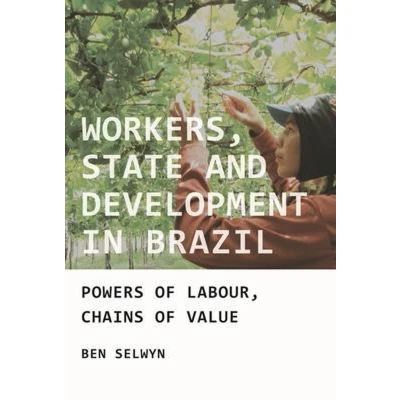
Workers, State and Development in Brazil
Uitgelicht

|
28,99 |
Naar shop
|

|
46,53 |
Naar shop
|
| VERGELIJK ALLE AANBIEDERS (2) | ||
 Beschrijving
Bol Partner
Provides an in-depth study of agrarian capitalist developmental in Brazil. How do changing class relations contribute to processes of capitalist development? Within the field of development studies, the importance of class relations is usually relegated to lesser status than the roles of states and markets in generating and allocating resources. This book argues that processes of class formation, struggle, and crucially, the changing balance of class forces between capital and labour constitute a key determinant of different patterns of capitalist development. Workers, state and development in Brazil illuminates these key issues in political economy through a detailed empirical investigation of the nexus between class dynamics and developmental processes and outcomes in North East Brazil’s São Francisco valley. It details how workers in the valley’s export grape sector have utilized their structural and associational power to win concessions from employers, contributing to a progressive pattern of regional capitalist development. Based on a stimulating engagement with and critique of World Systems Theory and the Global Commodity Chains approach, this book will be of wide-ranging interest to those interested in understanding how global dynamics impact on local development. It will appeal to students and researchers interested in processes of capitalist development, class formation and dynamics, North East Brazilian political economy and International Political Economy. How do changing class relations contribute to processes of capitalist development? Within development studies the importance of class relations is usually relegated to lesser status than the roles of states and markets in generating and allocating resources. This book argues that the changing class relations are central to different patterns of capitalist development and that processes and outcomes of class struggle co-determine the form that development takes. Workers, State and Development in Brazil, nominated for the International Political Economy Group (IPGG) Book Prize 2013 and now available in paperback, illuminates these claims through a detailed empirical investigation of class dynamics and capitalist development in North East Brazil’s São Francisco valley. It details how workers in the valley’s export grape sector have won significant concessions from employers, contributing to a progressive pattern of regional capitalist development. The book will appeal to students and researchers interested in processes of capitalist development, agrarian political economy and international political economy.


 Beschrijving
(2)
Beschrijving
(2)
Provides an in-depth study of agrarian capitalist developmental in Brazil. How do changing class relations contribute to processes of capitalist development? Within the field of development studies, the importance of class relations is usually relegated to lesser status than the roles of states and markets in generating and allocating resources. This book argues that processes of class formation, struggle, and crucially, the changing balance of class forces between capital and labour constitute a key determinant of different patterns of capitalist development. Workers, state and development in Brazil illuminates these key issues in political economy through a detailed empirical investigation of the nexus between class dynamics and developmental processes and outcomes in North East Brazil’s São Francisco valley. It details how workers in the valley’s export grape sector have utilized their structural and associational power to win concessions from employers, contributing to a progressive pattern of regional capitalist development. Based on a stimulating engagement with and critique of World Systems Theory and the Global Commodity Chains approach, this book will be of wide-ranging interest to those interested in understanding how global dynamics impact on local development. It will appeal to students and researchers interested in processes of capitalist development, class formation and dynamics, North East Brazilian political economy and International Political Economy. How do changing class relations contribute to processes of capitalist development? Within development studies the importance of class relations is usually relegated to lesser status than the roles of states and markets in generating and allocating resources. This book argues that the changing class relations are central to different patterns of capitalist development and that processes and outcomes of class struggle co-determine the form that development takes. Workers, State and Development in Brazil, nominated for the International Political Economy Group (IPGG) Book Prize 2013 and now available in paperback, illuminates these claims through a detailed empirical investigation of class dynamics and capitalist development in North East Brazil’s São Francisco valley. It details how workers in the valley’s export grape sector have won significant concessions from employers, contributing to a progressive pattern of regional capitalist development. The book will appeal to students and researchers interested in processes of capitalist development, agrarian political economy and international political economy.
BolProvides an in-depth study of agrarian capitalist developmental in Brazil. How do changing class relations contribute to processes of capitalist development? Within the field of development studies, the importance of class relations is usually relegated to lesser status than the roles of states and markets in generating and allocating resources. This book argues that processes of class formation, struggle, and crucially, the changing balance of class forces between capital and labour constitute a key determinant of different patterns of capitalist development. Workers, state and development in Brazil illuminates these key issues in political economy through a detailed empirical investigation of the nexus between class dynamics and developmental processes and outcomes in North East Brazil’s São Francisco valley. It details how workers in the valley’s export grape sector have utilized their structural and associational power to win concessions from employers, contributing to a progressive pattern of regional capitalist development. Based on a stimulating engagement with and critique of World Systems Theory and the Global Commodity Chains approach, this book will be of wide-ranging interest to those interested in understanding how global dynamics impact on local development. It will appeal to students and researchers interested in processes of capitalist development, class formation and dynamics, North East Brazilian political economy and International Political Economy. How do changing class relations contribute to processes of capitalist development? Within development studies the importance of class relations is usually relegated to lesser status than the roles of states and markets in generating and allocating resources. This book argues that the changing class relations are central to different patterns of capitalist development and that processes and outcomes of class struggle co-determine the form that development takes. Workers, state and development in Brazil illuminates these claims through a detailed empirical investigation of class dynamics and capitalist development in North East Brazil’s São Francisco valley. It details how workers in the valley’s export grape sector have won significant concessions from employers, contributing to a progressive pattern of regional capitalist development. The book will appeal to students and researchers interested in processes of capitalist development, agrarian political economy and international political economy.
 Productspecificaties
| EAN |
|
|---|---|
| Maat |
|
 Prijshistorie
Prijzen voor het laatst bijgewerkt op:
 Gerelateerde resultaten


