
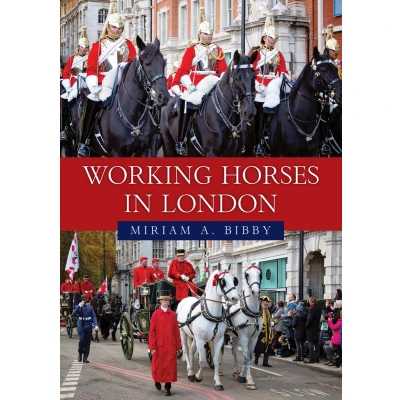
Working Horses in London
Uitgelicht

|
19,00 |
Naar shop
|
| VERGELIJK ALLE AANBIEDERS (1) | ||
 Beschrijving
Bol
The relationship between humans and horses has played a vital role in shaping our towns and cities. This book offers a fascinating insight into the history of working horses in London. For centuries, London and its citizens relied on horses, donkeys and mules to provide the necessities and luxuries of life. There was scarcely an event or activity in England’s capital that did not in some way require equine support. A twelfth-century description of London’s most famous horse fair, Smithfield, shows the importance of the packhorses, swift palfreys, powerful warhorses and draught mares and their foals to the economy and social life of the city. Horses were still on sale at Southall Market in the early years of the twenty-first century. In Chaucer’s day, packhorses, as well as mounted knights, squires and merchants, clattered over London Bridge on their way to and from far-off places. In Tudor and Stuart times, horses displayed the power and authority of monarchs, mayors and senior clergy. In the eighteenth century, the Macaronis mounted on pretty ponies showed off in London’s parks. Meanwhile, malt, dray and draught horses continued to serve all classes of society. There were so many hard-working equines that people scarcely noticed their existence. Nineteenth-century London was still a city of the horse, despite the arrival of steam power. Horse-drawn coaches continued to pour into London inns until the 1840s and at the end of the century horse-drawn omnibuses, cabs, and trams were as necessary to London’s workers and commuters as the railways. Even today, horses can still be found working on London’s streets and in its parks. This is their story.


Vergelijk aanbieders (1)

 Beschrijving
(1)
Beschrijving
(1)
The relationship between humans and horses has played a vital role in shaping our towns and cities. This book offers a fascinating insight into the history of working horses in London. For centuries, London and its citizens relied on horses, donkeys and mules to provide the necessities and luxuries of life. There was scarcely an event or activity in England’s capital that did not in some way require equine support. A twelfth-century description of London’s most famous horse fair, Smithfield, shows the importance of the packhorses, swift palfreys, powerful warhorses and draught mares and their foals to the economy and social life of the city. Horses were still on sale at Southall Market in the early years of the twenty-first century. In Chaucer’s day, packhorses, as well as mounted knights, squires and merchants, clattered over London Bridge on their way to and from far-off places. In Tudor and Stuart times, horses displayed the power and authority of monarchs, mayors and senior clergy. In the eighteenth century, the Macaronis mounted on pretty ponies showed off in London’s parks. Meanwhile, malt, dray and draught horses continued to serve all classes of society. There were so many hard-working equines that people scarcely noticed their existence. Nineteenth-century London was still a city of the horse, despite the arrival of steam power. Horse-drawn coaches continued to pour into London inns until the 1840s and at the end of the century horse-drawn omnibuses, cabs, and trams were as necessary to London’s workers and commuters as the railways. Even today, horses can still be found working on London’s streets and in its parks. This is their story.
 Productspecificaties
| EAN |
|
|---|---|
| Maat |
|
 Prijshistorie
Prijzen voor het laatst bijgewerkt op:
 Gerelateerde resultaten


