


€ 13,50 € 2,99 verzendkosten Totaal € 16,49

Uitgelicht
|
|
13,50 |
Naar shop
|

|
13,90 |
Naar shop
|
| VERGELIJK ALLE AANBIEDERS (2) | ||
 Beschrijving
Vergelijk aanbieders (2)
€ 13,50 € 2,99 verzendkosten Totaal € 16,49
€ 13,90 Gratis verzending
Winkels met andere maten
Beschrijving
(1)
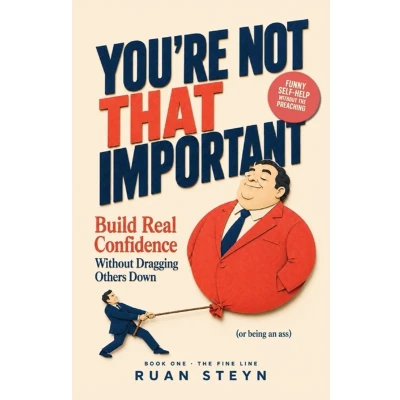
You're not that important.Nobody means that as an insult. It is the best news you will get this year, and believing it will hand you back an enormous amount of your life.Start here. There is a sentence you said out loud this week that you are still editing. You have replayed it enough times to have notes on your own delivery. You have drafted the better version you should have used. At some point you checked whether that person had liked anything of yours since.They do not remember it. Not because they are cruel. Because they were busy replaying something they said, to you, which you have entirely forgotten.That is what the title means. Not that you do not matter. That you are not being watched anywhere near as closely as you have been living as though you are.And the watching is the expensive part. Managing how you come across takes attention, most of it, for most of your life. Every hour of it is an hour not spent on anything you would name if someone asked what actually mattered to you. You do not get those hours back, and you are spending more of them this week.You're Not That Important argues that the performance itself, the self-promotion and the comparison and the low-grade need to matter in everyone's eyes, is what stands between most of us and the lives we actually want. It draws on psychology research, the longest-running happiness study ever conducted, and a genuinely embarrassing amount of personal material.What changes by the end: - You replay conversations for days. You will understand why almost nobody noticed the thing you are still thinking about.- Criticism ruins your week. You will be able to take it, use the useful part, and be fine by lunch.- You compare yourself to everyone. You will see why that is comparing a violin to a drum, and why the question was wrong.- You confuse confidence with volume. You will know the difference between the real thing and the loud version that costs people their friends.- You are chasing things you never actually chose. You will have a shorter, better list, including what the research really says about money and happiness.That last one includes the famous finding about money that half of self-help still quotes, and the 2023 paper in which the original researcher substantially undid it. Most books skip that part. A book that only tells you the tidy version is not worth trusting on anything else.So, one more time, and now it should read as a relief rather than a slap.You're not that important. This is not a book about thinking less of yourself. It is a book about thinking of yourself less. That difference turns out to be the whole game.Funny when it can be. Honest when it has to be. Useful throughout.Book One in The Fine Line series: the good stuff, minus the bad version.
 Prijshistorie
 * Prijshistorie bevat geen data van Amazon.
Prijzen voor het laatst bijgewerkt op:
 Gerelateerde resultaten
 Productspecificaties


