

€ 12,95 Gratis verzending

Uitgelicht
|
|
12,95 |
Naar shop
|

|
12,95 |
Naar shop
|

|
13,50 |
Naar shop
|
| VERGELIJK ALLE AANBIEDERS (3) | ||
 Beschrijving
Vergelijk aanbieders (3)
€ 12,95 Gratis verzending
€ 12,95 Gratis verzending
€ 13,50 € 2,99 verzendkosten Totaal € 16,49
Winkels met andere maten
Beschrijving
(1)
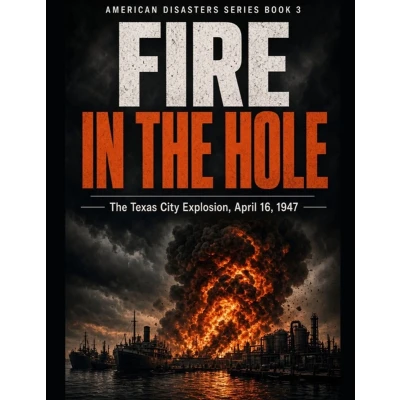
At 9:12 a.m. on April 16, 1947, all the clocks in Texas City froze.The SS Grandcamp, a French cargo ship loaded with 2,300 tons of ammonium nitrate fertilizer, detonated at the dock of the Port of Texas City, Texas. The ship's two-ton anchor was thrown two miles. Two sightseeing planes were blown out of the sky. Windows shattered in Galveston, ten miles away. The blast registered on a seismograph in Denver, Colorado.The Texas City Volunteer Fire Department - twenty-eight men who had responded to the fire on the Grandcamp and were working on the dock when the ship detonated - was gone. All but one were killed instantly. Their four fire trucks were destroyed with them.Then, sixteen hours later, the second ship exploded.Fire in the Hole tells the complete story of the deadliest industrial accident in American history: The Port - Texas City in 1947 was a Gulf Coast industrial city of 16,000 people, dominated by the Monsanto Chemical Company, oil terminals, and a port handling postwar surplus cargo. Dock fires were common enough that residents came to watch them. This familiarity would prove fatal.The Grandcamp - The ammonium nitrate had been manufactured for wartime explosives and repurposed as agricultural fertilizer for postwar Europe. 80,000 tons had passed through Texas City without incident. When smoke was noticed in the hold on the morning of April 16, the ship's captain made the decision that transformed a fire into a catastrophe: he sealed the hatches and injected steam, creating the confinement and heat that ammonium nitrate requires to detonate.9:12 a.m. - 2,300 tons of ammonium nitrate, confined and heated, exploded. The Monsanto plant (300 feet away) was demolished, killing 234 of 574 workers. A 15-foot tidal wave swept the waterfront. Debris traveled for miles. The 26 firefighters on the dock were killed, along with the bystanders who had come to watch.The Second Ship - The SS High Flyer, loaded with 1,000 tons of ammonium nitrate and sulfur, had been damaged by the first explosion. Attempts to tow it to safety failed. At 1:15 a.m. on April 17, it detonated. The fires burned for a week.The Reckoning - Texas City produced the first class-action lawsuit ever filed against the United States government under the newly enacted Federal Tort Claims Act - 8,485 plaintiffs, resolved only when Congress passed specific legislation. And it produced new hazardous materials regulations that directly shaped American industrial safety law.The same material blew up Beirut in 2020. The lesson of Texas City has still not been universally learned.Fire in the Hole is Book 3 of the American Disasters series.
 Prijshistorie
 * Prijshistorie bevat geen data van Amazon, Amazon Marketplace.
Prijzen voor het laatst bijgewerkt op:
 Gerelateerde resultaten
 Productspecificaties


