

€ 12,96 Gratis verzending

Uitgelicht
|
|
12,96 |
Naar shop
|

|
13,50 |
Naar shop
|
| VERGELIJK ALLE AANBIEDERS (2) | ||
 Beschrijving
Vergelijk aanbieders (2)
€ 12,96 Gratis verzending
€ 13,50 € 2,99 verzendkosten Totaal € 16,49
Winkels met andere maten
Beschrijving
(1)
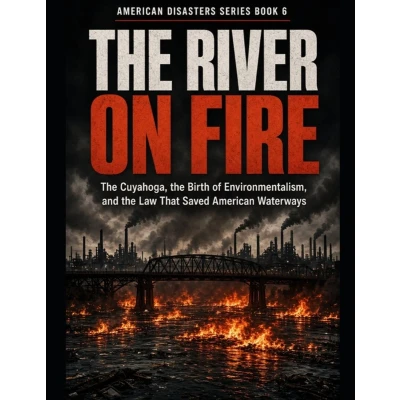
On June 22, 1969, the Cuyahoga River in Cleveland caught fire. The fire lasted twenty minutes. It caused approximately $50,000 in damage. No one was injured. No photograph was taken. The Cleveland Plain Dealer covered it in six paragraphs on an interior page.Six weeks later, it was one of the most recognized environmental images in the world.The River on Fire is the story of how a modest industrial fire became a national environmental landmark - and of the specific people and decisions that made it happen.The photograph that made the Cuyahoga River internationally notorious was not from 1969. It was from a much larger fire on the same river in 1952. When Time magazine ran its landmark environment issue in August 1969, it used the dramatic 1952 image of flames leaping above a burning tugboat to illustrate an article about a fire that had lasted twenty minutes and left no visual record.The person most responsible for turning that modest fire into a national story was Carl Stokes - the first Black mayor of a major American city, who held a press conference on the damaged bridge the day after the fire, organized a pollution tour for the press, and made the ecological crisis of the Cuyahoga and Lake Erie into a question of federal policy. The environmental journalist who made the story comprehensible was Betty Klaric of the Cleveland Press, one of the nation's first full-time environmental reporters.The River on Fire tells the complete story in five parts: The River and the City - How Cleveland's industrial economy used the Cuyahoga as a waste disposal system for decades. How Lake Erie, declared "dead" by the mid-1960s, became the broader context for the fire's symbolism. How the river had burned nine times before 1969, worse.The Fire - The twenty minutes, the six paragraphs, the missing photograph, and Carl Stokes's recognition that the fire was not primarily a story about a river.The Symbol - The wrong photograph, Time magazine's August 1, 1969 issue, and the specific alchemy by which a fact becomes a symbol. Why "it oozes rather than flows" worked as environmental rhetoric in a way that decades of documented pollution had not.The Environmental Movement - Rachel Carson, the Santa Barbara oil spill, Earth Day 1970 with twenty million participants, the formation of the EPA, and the Clean Water Act of 1972 that Nixon vetoed and Congress overrode 52-12.The River Today - Lake Erie's recovery, the Cuyahoga's sixty-plus fish species, and what the Clean Water Act both accomplished and failed to address.The river is still there. So are the fish.The River on Fire is Book 6 of the American Disasters series.
 Prijshistorie
 * Prijshistorie bevat geen data van Amazon.
Prijzen voor het laatst bijgewerkt op:
 Gerelateerde resultaten
 Productspecificaties


