
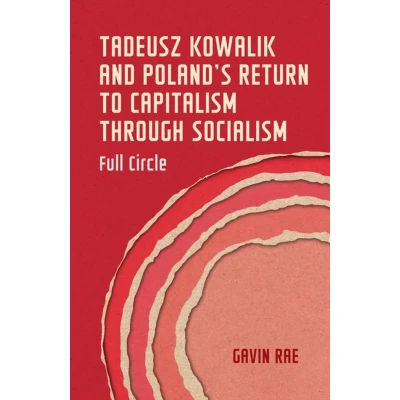
Geopolitical Economy Tadeusz Kowalik and Poland's Return to Capitalism Through Socialism
Uitgelicht

|
115,00 |
Naar shop
|
| VERGELIJK ALLE AANBIEDERS (1) | ||
 Beschrijving
Bol
This book covers the intellectual and political life of Tadeusz Kowalik within the context of modern Polish history. Kowalik was part of a group of left-wing intellectuals, the Polish School; he participated in events such as the shipyard strikes in 1980 before becoming a vehement opponent of Poland’s neoliberal transformation to capitalism. This book examines the intellectual and political life of the historian of economic ideas, Tadeusz Kowalik. Kowalik grew up in a small town in the east of Poland, where he experienced the realities of poverty and social inequality in pre-War Polish capitalism before then being plunged into the horrors of Nazi occupation. He quickly advanced within the new socialist system installed after the War, cooperating with a group of critical socialist intellectuals that included Michal Kalecki and Oskar Lange who followed in the footsteps of Polish Marxist political economists such as Rosa Luxemburg. This book covers the work of Kowalik, and others from this Polish School of critical political economy, within the context of the unfolding events and debates occurring at the time. Kowalik participated in some of the most meaningful events in post-war Poland, culminating in him instigating a delegation of intellectuals to visit and advise strikers during the momentous strikes at the shipyards in Gdansk. After living abroad for most of the bleak 1980s, Kowalik returned to Poland as the transformation from socialism to capitalism began. He stood out as a vocal critic of the neoliberal form of capitalism installed in Poland, arguing that a range of alternatives to neoliberal capitalism and neoclassical economics existed. By the time Kowalik died in 2012, his life had come full circle, as he once again observed world capitalism plunge into crises and right-wing political authoritarianism rise in Poland and beyond. Tadeusz Kowalik lived through ten decades and three economic and political systems in Poland. He combined his academic study of economic ideas with his socialist ideals of building a fairer and more just society. This book covers the intellectual and political work of Kowalik, within the context of modern Polish history. Kowalik was part of a Polish School of critical left-wing political economists, that included Michal Kalecki and Oskar Lange. Kowalik contributed to the body of work produced by this group, which included his interpretation of their work. Kowalik participated in some of the most momentous events in post-war Polish history, helping to organise a group of intellectuals to advise the shipyard workers at the Gdansk shipyards in 1980. He became a vehement opponent of Poland’s neoliberal form of capitalism and left a body of work that illuminates our understanding of capitalism and socialism today.


Vergelijk aanbieders (1)

 Beschrijving
(1)
Beschrijving
(1)
This book covers the intellectual and political life of Tadeusz Kowalik within the context of modern Polish history. Kowalik was part of a group of left-wing intellectuals, the Polish School; he participated in events such as the shipyard strikes in 1980 before becoming a vehement opponent of Poland’s neoliberal transformation to capitalism. This book examines the intellectual and political life of the historian of economic ideas, Tadeusz Kowalik. Kowalik grew up in a small town in the east of Poland, where he experienced the realities of poverty and social inequality in pre-War Polish capitalism before then being plunged into the horrors of Nazi occupation. He quickly advanced within the new socialist system installed after the War, cooperating with a group of critical socialist intellectuals that included Michal Kalecki and Oskar Lange who followed in the footsteps of Polish Marxist political economists such as Rosa Luxemburg. This book covers the work of Kowalik, and others from this Polish School of critical political economy, within the context of the unfolding events and debates occurring at the time. Kowalik participated in some of the most meaningful events in post-war Poland, culminating in him instigating a delegation of intellectuals to visit and advise strikers during the momentous strikes at the shipyards in Gdansk. After living abroad for most of the bleak 1980s, Kowalik returned to Poland as the transformation from socialism to capitalism began. He stood out as a vocal critic of the neoliberal form of capitalism installed in Poland, arguing that a range of alternatives to neoliberal capitalism and neoclassical economics existed. By the time Kowalik died in 2012, his life had come full circle, as he once again observed world capitalism plunge into crises and right-wing political authoritarianism rise in Poland and beyond. Tadeusz Kowalik lived through ten decades and three economic and political systems in Poland. He combined his academic study of economic ideas with his socialist ideals of building a fairer and more just society. This book covers the intellectual and political work of Kowalik, within the context of modern Polish history. Kowalik was part of a Polish School of critical left-wing political economists, that included Michal Kalecki and Oskar Lange. Kowalik contributed to the body of work produced by this group, which included his interpretation of their work. Kowalik participated in some of the most momentous events in post-war Polish history, helping to organise a group of intellectuals to advise the shipyard workers at the Gdansk shipyards in 1980. He became a vehement opponent of Poland’s neoliberal form of capitalism and left a body of work that illuminates our understanding of capitalism and socialism today.
 Productspecificaties
| EAN |
|
|---|---|
| Maat |
|
 Prijshistorie
Prijzen voor het laatst bijgewerkt op:
 Gerelateerde resultaten


