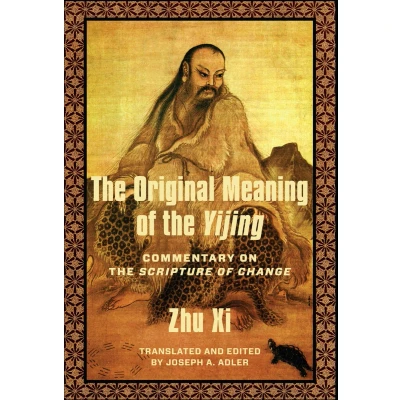

the Original Meaning of Yijing: Commentary on Scripture Change

Prijzen vanaf
22,99

Uitgelicht

VERGELIJK ALLE AANBIEDERS (2)

Beschrijving

Bol Partner One of the most influential commentaries on the Yijing (I Ching), or Scripture of Change, for the past thousand years has been that of Zhu Xi (1130–1200). Joseph A. Adler’s translation of the Yijing includes for the first time in any Western language Zhu Xi’s commentary in full. The Yijing (I Ching), or Scripture of Change, is traditionally considered the first and most profound of the Chinese classics. Originally a divination manual based on trigrams and hexagrams, by the beginning of the first millennium it had acquired written explanations and a series of appendices attributed to Confucius, which transformed it into a work of wisdom literature as well as divination. Over the centuries, hundreds of commentaries were written on it, but for the past thousand years, one of the most influential has been that of Zhu Xi (1130–1200), who synthesized the major interpretive approaches to the text and integrated it into his system of moral self-cultivation. Joseph A. Adler’s translation of the Yijing includes for the first time in English Zhu Xi’s commentary in full. Adler explores Zhu Xi’s interpretation of the text and situates it in the context of his overall theoretical system. Zhu Xi held that the Yijing was originally composed for the purpose of divination by the mythic sage Fuxi, who intended to create a system to aid decision making. The text’s meaning, therefore, could not be captured by a single commentator; it would emerge for each person through the process of divination. This translation makes available to the English-language audience a crucial text in the history of Chinese religion and philosophy, with an introduction and translator’s notes that explain its intellectual and historical context.

Vergelijk aanbieders (2)

Shop
Prijs
Verzendkosten
Totale prijs
22,99
Gratis
22,99
Naar shop
Gratis Shipping Costs
91,77
gebruikt
Gratis
91,77
Naar shop
Gratis Shipping Costs
Beschrijving (2)
Bol Partner

One of the most influential commentaries on the Yijing (I Ching), or Scripture of Change, for the past thousand years has been that of Zhu Xi (1130–1200). Joseph A. Adler’s translation of the Yijing includes for the first time in any Western language Zhu Xi’s commentary in full. The Yijing (I Ching), or Scripture of Change, is traditionally considered the first and most profound of the Chinese classics. Originally a divination manual based on trigrams and hexagrams, by the beginning of the first millennium it had acquired written explanations and a series of appendices attributed to Confucius, which transformed it into a work of wisdom literature as well as divination. Over the centuries, hundreds of commentaries were written on it, but for the past thousand years, one of the most influential has been that of Zhu Xi (1130–1200), who synthesized the major interpretive approaches to the text and integrated it into his system of moral self-cultivation. Joseph A. Adler’s translation of the Yijing includes for the first time in English Zhu Xi’s commentary in full. Adler explores Zhu Xi’s interpretation of the text and situates it in the context of his overall theoretical system. Zhu Xi held that the Yijing was originally composed for the purpose of divination by the mythic sage Fuxi, who intended to create a system to aid decision making. The text’s meaning, therefore, could not be captured by a single commentator; it would emerge for each person through the process of divination. This translation makes available to the English-language audience a crucial text in the history of Chinese religion and philosophy, with an introduction and translator’s notes that explain its intellectual and historical context.

Bol

The Yijing (I Ching), or Scripture of Change, is traditionally considered the first and most profound of the Chinese classics. Originally a divination manual based on trigrams and hexagrams, by the beginning of the first millennium it had acquired written explanations and a series of appendices attributed to Confucius, which transformed it into a work of wisdom literature as well as divination. Over the centuries, hundreds of commentaries were written on it, but for the past thousand years, one of the most influential has been that of Zhu Xi (1130–1200), who synthesized the major interpretive approaches to the text and integrated it into his system of moral self-cultivation. Joseph A. Adler’s translation of the Yijing includes for the first time in English Zhu Xi’s commentary in full. Adler explores Zhu Xi’s interpretation of the text and situates it in the context of his overall theoretical system. Zhu Xi held that the Yijing was originally composed for the purpose of divination by the mythic sage Fuxi, who intended to create a system to aid decision making. The text’s meaning, therefore, could not be captured by a single commentator; it would emerge for each person through the process of divination. This translation makes available to the English-language audience a crucial text in the history of Chinese religion and philosophy, with an introduction and translator’s notes that explain its intellectual and historical context.


Productspecificaties

EAN
  • 9780231549301
  • 9780231191241
Maat


Prijshistorie

Prijzen voor het laatst bijgewerkt op:

Uitgelichte Keuze
22,99
Naar shop
