


€ 14,00 € 2,99 verzendkosten Totaal € 16,99

Uitgelicht
|
|
14,00 |
Naar shop
|
| VERGELIJK ALLE AANBIEDERS (1) | ||
 Beschrijving
Vergelijk aanbieders (1)
€ 14,00 € 2,99 verzendkosten Totaal € 16,99
Winkels met andere maten
Beschrijving
(1)
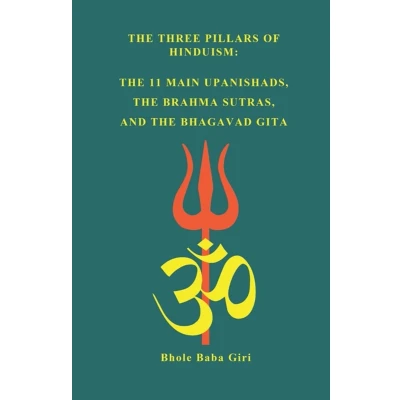
This book presents the complete texts of the "three original points" (prasthana-traya) of Hinduism: the 11 principal Upanishads, the Brahma Sutras, and the Bhagavad Gita. Studying these texts enables the reader to gain an independent understanding of the foundations of Hinduism, and especially the foundations of Vedanta in particular and Vedic teachings in general. The Three Foundations of Hinduism, or prasthāna-trayī (prasthānatrayī-"three points of departure") in Sanskrit, is a general name for a group of canonical texts of the Hindu philosophical tradition, especially for the schools that identify themselves with Vedanta. Prasthana-traya consists of three parts: 1. Mukhya Upanishads-obligatory texts (upadeshah-prasthana). The word "mukhya" means "principal", "chief", "outstanding". Most often, this list includes 11 principal (oldest) Upanishads, but the exact number of such selected Upanishads varies from 10 to 13 in different sources. 2. Brahma Sutras-a logical text (nyaya prasthana). 3. Bhagavad Gita-a practical text (sadhana-prasthana). If the Upanishads are the basis of revelation (sruti-prasthana) in Vedanta, and the Bhagavad Gita is the basis of remembrance of tradition (smriti-prasthana), then the Brahma Sutras are the basis of logical-epistemological (nyaya) reasoning. All the founders of the three main schools of Vedanta-Shankara, Ramanuja, and Madhva-composed their own commentaries (bhashyas) on the prasthāna-traya. For Hindu philosophical schools claiming affiliation with the Vedas and Vedanta and the right to consider their school "Vedic", it is obligatory to have commentaries on the entire canon of the prasthāna-traya.
 Productspecificaties
| EAN |
|
|---|---|
| Maat |
|
 Prijshistorie
 Prijzen voor het laatst bijgewerkt op:
 Gerelateerde resultaten


