
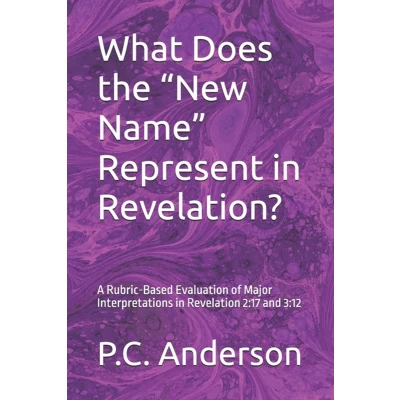
What Does the “New Name Represent in Revelation?: A Rubric-Based Evaluation of Major Interpretations Revelation 2:17 and 3:12
Uitgelicht

|
11,28 |
Naar shop
|

|
11,28 |
Naar shop
|

|
12,50
11,50 |
Naar shop
|
| VERGELIJK ALLE AANBIEDERS (3) | ||
 Beschrijving
Bol
This book offers the first fully structured, evidence-based evaluation of one of Revelation's most intriguing promises-the "new name" given to the overcomer. Drawing from Revelation 2:17 and 3:12, P.C. Anderson builds a nine-variable rubric to test the major responsible interpretations: New Identity, Covenant Adoption, Royal Status, Eternal Intimacy, and Composite Symbolism. Each is scored against the biblical text, Greek vocabulary, literary placement, historical background, canonical theology, symbolic coherence, and explanatory economy.Using this transparent method, the book demonstrates that the Composite Symbolism view-where the new name simultaneously conveys new identity, covenant belonging, royal status, and eternal intimacy-best fits the evidence. Anderson shows how the hidden name on the white stone (2:17) and the public threefold inscription on the pillar (3:12) form a deliberate literary and theological pairing. The promises address two very different churches: Pergamum, pressured to compromise, receives a secret token of intimate divine vindication; Philadelphia, publicly shamed and weak, receives permanent, visible honor in God's eternal temple.Across the chapters, readers explore: - The precise Greek wording of onoma ("name"), kainon ("new"), the white stone, and the pillar- The historical realities of imperial cults, tessera tokens, temple inscriptions, and ancient renaming practices- The pastoral function of the new name as both hidden comfort and public vindication- The deep canonical roots in Isaiah's new-creation promises and Revelation's later visions (14:1; 19:12; 22:4)- The symbolic tension between secrecy and inscription-and how Revelation uses both to strengthen endurance Rather than reducing the new name to a single category-legal, mystical, psychological, or royal-this study shows how Revelation intentionally blends them. The new name is a real divine promise: intimate, covenantal, royal, and transformative. It assures persecuted believers that Christ both knows them personally and will honor them publicly in the New Jerusalem.Accessible tables, summaries, and reflection questions make this book ideal for pastors, scholars, teachers, and serious students of Scripture. Anderson's method equips readers to evaluate the evidence themselves and rediscover the wonder of Revelation's message: God sovereignly seals His overcomers with a multifaceted identity that will never be erased.


 Beschrijving
(1)
Beschrijving
(1)
This book offers the first fully structured, evidence-based evaluation of one of Revelation's most intriguing promises-the "new name" given to the overcomer. Drawing from Revelation 2:17 and 3:12, P.C. Anderson builds a nine-variable rubric to test the major responsible interpretations: New Identity, Covenant Adoption, Royal Status, Eternal Intimacy, and Composite Symbolism. Each is scored against the biblical text, Greek vocabulary, literary placement, historical background, canonical theology, symbolic coherence, and explanatory economy.Using this transparent method, the book demonstrates that the Composite Symbolism view-where the new name simultaneously conveys new identity, covenant belonging, royal status, and eternal intimacy-best fits the evidence. Anderson shows how the hidden name on the white stone (2:17) and the public threefold inscription on the pillar (3:12) form a deliberate literary and theological pairing. The promises address two very different churches: Pergamum, pressured to compromise, receives a secret token of intimate divine vindication; Philadelphia, publicly shamed and weak, receives permanent, visible honor in God's eternal temple.Across the chapters, readers explore: - The precise Greek wording of onoma ("name"), kainon ("new"), the white stone, and the pillar- The historical realities of imperial cults, tessera tokens, temple inscriptions, and ancient renaming practices- The pastoral function of the new name as both hidden comfort and public vindication- The deep canonical roots in Isaiah's new-creation promises and Revelation's later visions (14:1; 19:12; 22:4)- The symbolic tension between secrecy and inscription-and how Revelation uses both to strengthen endurance Rather than reducing the new name to a single category-legal, mystical, psychological, or royal-this study shows how Revelation intentionally blends them. The new name is a real divine promise: intimate, covenantal, royal, and transformative. It assures persecuted believers that Christ both knows them personally and will honor them publicly in the New Jerusalem.Accessible tables, summaries, and reflection questions make this book ideal for pastors, scholars, teachers, and serious students of Scripture. Anderson's method equips readers to evaluate the evidence themselves and rediscover the wonder of Revelation's message: God sovereignly seals His overcomers with a multifaceted identity that will never be erased.
 Productspecificaties
 Prijshistorie
* Prijshistorie bevat geen data van Amazon, Amazon Marketplace.
Prijzen voor het laatst bijgewerkt op:
 Gerelateerde resultaten


