

€ 12,96 Gratis verzending

Uitgelicht
|
|
12,96 |
Naar shop
|

|
12,96 |
Naar shop
|

|
13,50 |
Naar shop
|
| VERGELIJK ALLE AANBIEDERS (3) | ||
 Beschrijving
Vergelijk aanbieders (3)
€ 12,96 Gratis verzending
€ 12,96 Gratis verzending
€ 13,50 € 2,99 verzendkosten Totaal € 16,49
Winkels met andere maten
Beschrijving
(1)
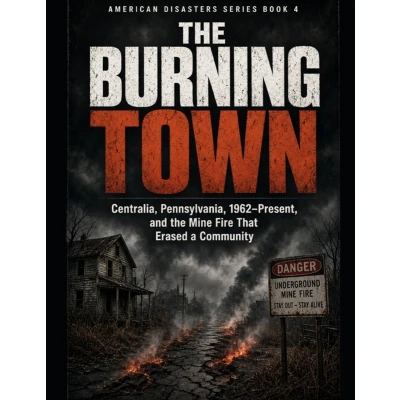
The fire started on May 27, 1962. It is still burning today.Centralia, Pennsylvania was a working-class anthracite coal town of approximately 1,400 people. In May 1962, the volunteer fire company lit a controlled trash burn in an abandoned strip pit on the edge of the borough. Through a fifteen-foot hole at the bottom of the pit - missed when the fire-retardant lining was installed, hidden under accumulated waste - fire entered the abandoned mine workings beneath the town and began burning the Buck Mountain Coal Bed. The coal seam stretches for miles. The abandoned mine tunnels that a century of mining had left beneath Centralia provided unlimited fuel and natural ventilation. Nobody has been able to stop it.The Burning Town tells the complete story of what happened next.The Town Before - Centralia at its peak had 2,800 residents, fourteen active coal mines, multiple churches, and the full institutional life of a century-old working-class community. By 1962, the mines were mostly closed and the population had fallen to 1,400. Those who remained had roots in the place going back generations.The Long Burn - For nineteen years, the fire burned underground largely unaddressed. The first effects were almost pleasant - snow that melted early, gardens with unusual vigor. Then came the carbon monoxide in the basements. Then the sinkholes.Valentine's Day, 1981 - Twelve-year-old Todd Domboski stepped onto a smoking patch of ground in a neighbor's yard and the earth opened beneath him. He fell into a hole four feet wide and 150 feet deep. Temperature inside: 350 degrees. Carbon monoxide: lethal levels. His cousin Eric Wolfgang pulled him out. This was the moment Centralia became a national story.The Evacuation - The government's assessment: extinguishing the fire would cost $663 million. Relocating the 1,000 remaining residents would cost $42 million. Congress chose relocation. By 1991, more than 540 homes and businesses had been acquired and demolished. Some residents refused to leave.What Remains - Approximately five people live in Centralia today. The borough has no ZIP code, no school, no stores. The streets have names and fire hydrants. The lots where houses stood are empty. Steam rises from cracks in the pavement. The warning signs say: the ground can collapse without warning.At current burn rates, the fire may continue for another 250 years.The Burning Town is Book 4 of the American Disasters series.
 Prijshistorie
 * Prijshistorie bevat geen data van Amazon, Amazon Marketplace.
Prijzen voor het laatst bijgewerkt op:
 Gerelateerde resultaten
 Productspecificaties


