


€ 74,99 Gratis verzending

Uitgelicht
|
|
74,99 |
Naar shop
|

|
75,35 |
Naar shop
|

|
75,35 |
Naar shop
|
| VERGELIJK ALLE AANBIEDERS (3) | ||
 Beschrijving
Vergelijk aanbieders (3)
€ 74,99 Gratis verzending
€ 75,35 Gratis verzending
€ 75,35 Gratis verzending
Winkels met andere maten
Beschrijving
(1)
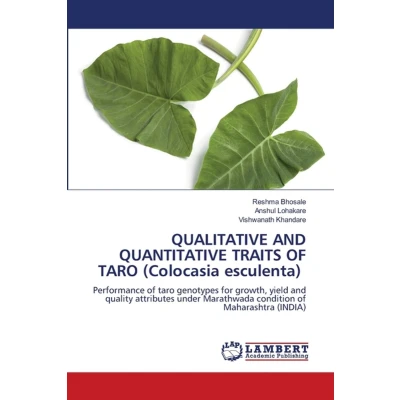
Taro (Colocasia esculenta L.) is the staple source of people's diet and the 14th most consumed vegetable worldwide. In terms of consumption, taro ranks second to sweet potatoes as a staple root crop. Taro is a popular food due to its excellent nutritional content, pleasant taste and flavor. It is rich in carbohydrates, protein, vitamins, and minerals such as Ca, Fe and P. The tubers contain high amounts of carbohydrates, while the leaves provide vitamins A and C, water (63-85%), protein (8-13%), carbohydrates (13-29%), fibre (0.6-1.2%), fat (2-4%) and other nutrients are present. Every portion of the plant, including the corm, cormels, petiole, leaves and flowers, is high in starch and are edible. Taro is widely underutilized crop in India, growing in only a few locations. Its genotypes have not been thoroughly researched in terms of growth, yield and quality attributes. Despite the fact that its leaves and corms are frequently consumed in Maharashtra's Marathwada region, considering above facts, views and constraint the study was conducted and presented in this book which will be certainly useful to the academicians, researchers and students.
 Prijshistorie
 * Prijshistorie bevat geen data van Amazon, Amazon Marketplace.
Prijzen voor het laatst bijgewerkt op:
 Gerelateerde resultaten
 Productspecificaties


